We provide healthy food for people and the planet.
We provide healthy food for people and the planet by producing and marketing food that is healthy, both for people and the environment. Most of our products are plant-based or vegetarian and many are natural and organic.
Midsona at a glance
We provide healthy food for people and planet by producing and marketing food that is healthy, both for people and the environment. Most of our products are plant-based or vegetarian and many are natural and organic.





Midsona has once again been recognized for its climate strategy and leadership by the global non-profit environmental initiative CDP. For the second year in a row, Midsona has achieved the highest rating, A, in CDP’s ranking in the area of Climate Change.
Midsona is committed to achieving net-zero by 2045, a goal validated by the Science Based Targets initiative. Its ambitious climate strategy has furthermore been recognized with CDP’s highest rating, A, for two consecutive years in the area of climate change.


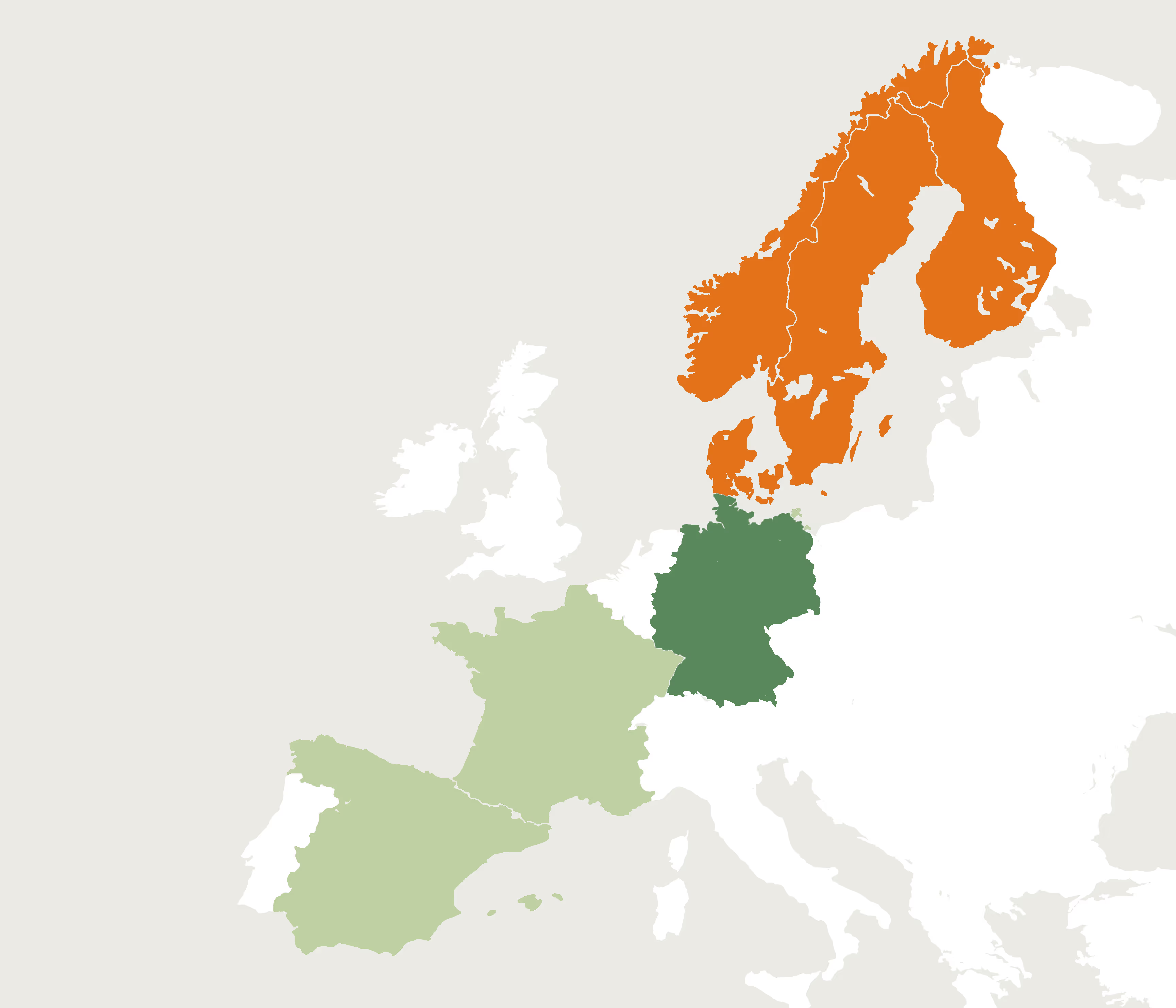
The business is organised in three divisions: Division Nordics, Division North Europe and Division South Europe, which have operational responsibility for product development, production, marketing, sales and distribution to customers



Our market and presence
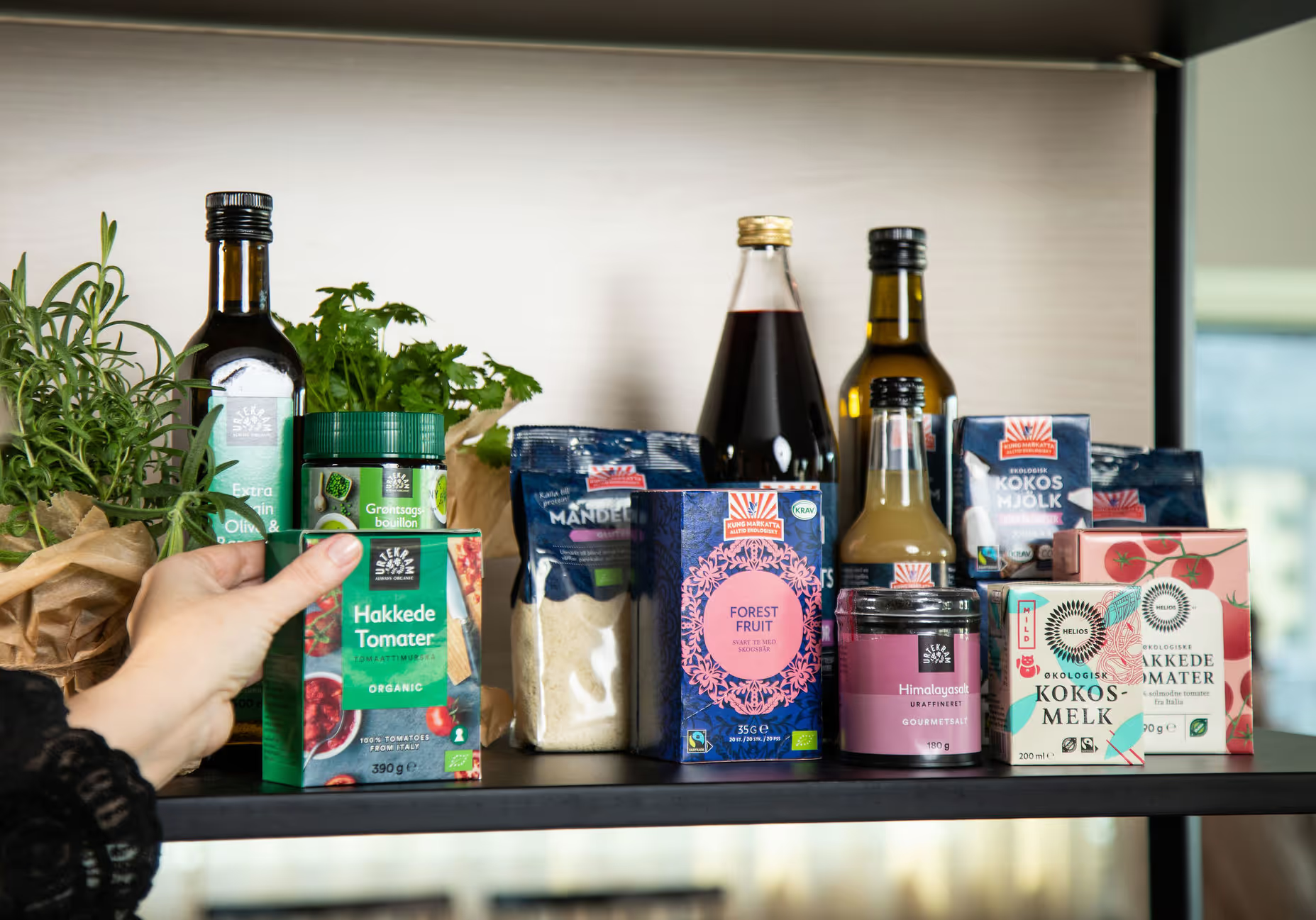
Midsona is a leading company in health and well-being, with a strong presence in the Nordic region and expanding markets in Germany, France, and Spain. With a focus on natural, organic, and plant-based products, Midsona’s portfolio includes trusted brands like Urtekram, Kung Markatta, and Davert. Guided by sustainability and consumer health trends, Midsona is shaping the future of the food and wellness industries through innovation, responsible sourcing, and efficient value chain management.
Net sales per area
External factors & drivers
- The market is stabilizing after a period of uncertainty
Following several years marked by high inflation, rising interest rates and an economic downturn – all of which have had a significant impact on consumers and their purchasing behavior – the European economy is now showing clear signs of stabilization. Inflation began to ease in 2024, and 2025 continued in the same positive direction with a more balanced price trend of around two per cent. This is a level that creates better conditions for both businesses and consumers. Although overall volume growth in the food industry remains low, forecasts from the European Commission indicate that the economy is gradually strengthening in certain geographical areas of Europe.
- Continued price sensitivity – but not in all food categories
When inflation has been high, it has been understandable that consumers have prioritized lower-priced food over more expensive alternatives that focus on organic, functional and high quality. This is beginning to change, and more consumers now value food that offers nutritional or health benefits. As many as 60 per cent of Nordic consumers say their food choices are driven by a desire to eat more nutritious food. Consumers’ desire to buy organic products remains strong, with around 70 per cent of consumers in the Nordics choosing organic products to some extent when shopping. Growth in the segment is being held back by persistently high food prices and a shift towards buying more local food. However, in an increasingly stabilized market, demand for organic, healthy and functional food is on the rise. As many as 69 per cent of global consumers believe that sustainability factors have become more important to them in recent years.
- The focus on sustainable eating habits, both nationally and internationally
Choosing sustainable and organic food is key to both public health and the environment. The IPCC highlights, among other things, sustainable agriculture and changing consumption habits – such as a more plant-based diet – as key factors for a sustainable future. Furthermore, both the Nordic Council of Ministers and the Swedish Food Agency have updated their dietary guidelines for 2025 to include increased intake of vegetables, whole grains and pulses, as well as reduced consumption of red meat. An increasing number of consumers are also choosing to cook vegetarian meals. Sustainable eating habits are seen as important both for the individual and for the planet. Similar trends are evident across the rest of Europe and globally.
- Growing interest in natural foods and dietary supplements
The market is creating several interesting opportunities for growth beyond mere volume – particularly within certain categories and sales channels. Interest in healthy, natural and function-oriented food, protein-rich products and products of high nutritional quality continue to rise. Interest in dietary supplements is also high. Half of Nordic consumers take vitamin supplements every day, and consumption of both protein-rich dairy products such as quark and cottage cheese, as well as protein bars, has increased significantly in recent years. Consumers are also increasingly demanding pure, natural products without unnecessary additives, driven by concerns about the impact of ultra-processed food on both individuals and the climate. This trend is particularly noticeable among younger consumers.
- “Healthy snacking” – the latest trend
A new generation of consumers is beginning to make its mark on the market. Products with great potential for this consumer group are healthy, functional and ready-to-eat items that are “on-the-go” and fit into their lifestyle. Studies show that as many as 77 per cent of global “Gen Z” buy food on the go every month. There is great potential in the “healthy snacking” category, where healthy snack alternatives are becoming increasingly popular. This trend is driven by several factors. Among other things, studies show that half of the Nordic population skips one meal a day, a habit potentially replaced by various alternative, easily accessible snacks. Furthermore, there is growing interest in snacks with health benefits, as well as plant-based, protein- and high in fibre, natural snacks.
- Midsona’s multifaceted product portfolio meets the market where it is growing
Consumers in Europe are slowly beginning to recover after several years of economic uncertainty marked by high inflation and rising prices. At the same time, healthy and sustainable choices are becoming increasingly central to consumers, creating new opportunities for players who can meet these needs. Although higher price levels sometimes dampen willingness to buy, there is a clear underlying interest in foods that combine nutrition, functionality and sustainability. This trend is particularly evident among younger consumers who actively seek products that support a healthy lifestyle.
Midsona has a strong market position thanks to its broad and diversified product portfolio. This encompasses healthy and function-focused products, such as high-protein options and dietary supplements. The portfolio also includes updated and innovative solutions in ‘healthy snacking’, which meets the growing demand for convenient and nutritious snacks. Midsona also produces and supplies products under retail chains’ own brands, known as private label. Private label strengthens Midsona’s market presence, enables it to reach more consumer segments and complements the company’s own brands, whilst creating growth opportunities in affordable and sustainable product categories.
Midsona is well positioned to capture further market share in segments where consumers are seeking products that combine quality, health, sustainability and value for money. The company’s clear strategy enables Midsona to continue driving progress towards a healthier and more sustainable future, where the success of the business rests on individual well-being and respect for the planet’s resources.
Targets & performance

Strategy
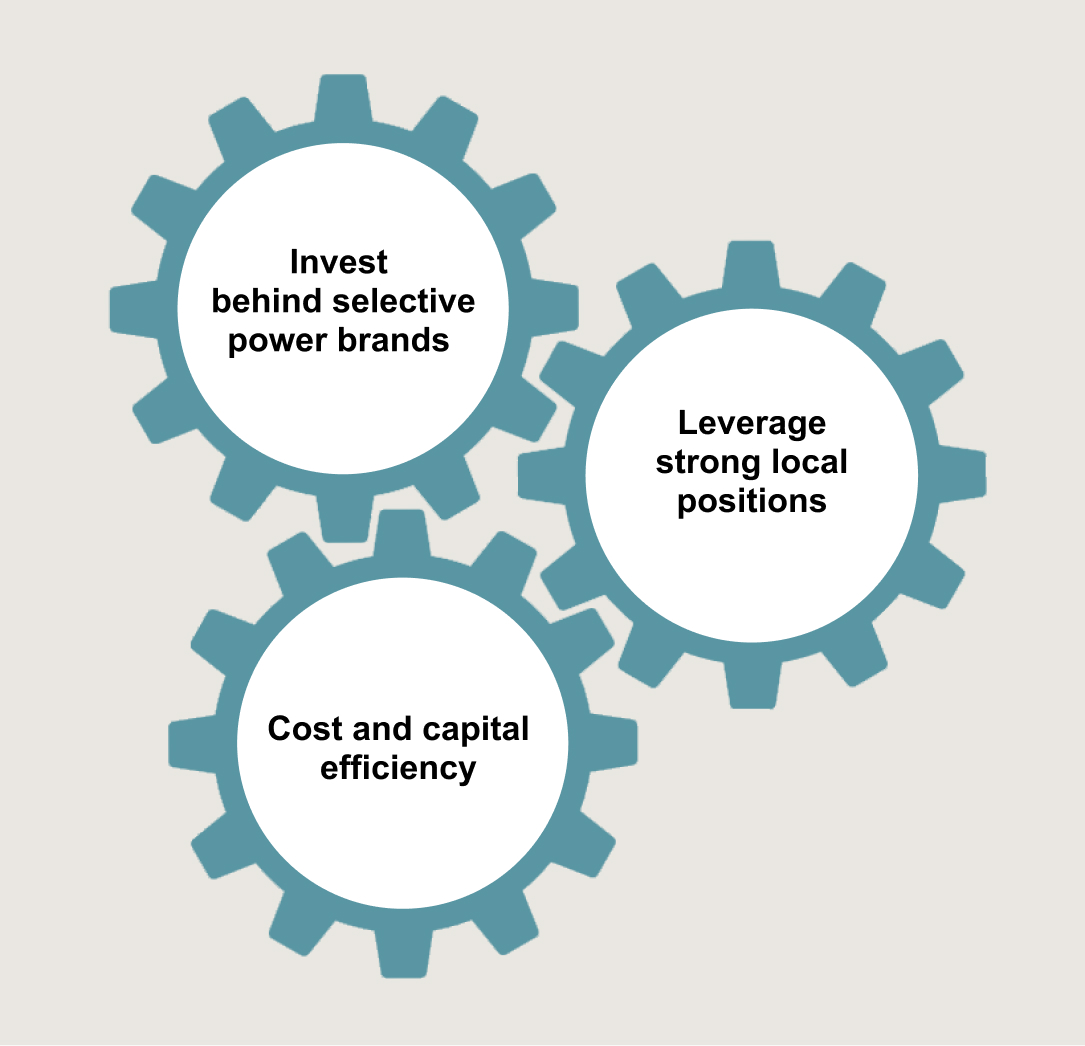
- Invest behind selective power brands
means prioritizing and investing in selected power brands that have the potential to become market leaders, thereby creating the conditions for long-term profitable growth in existing and new markets.
- Leverage strong local positions
means strengthening our presence in priority markets by winning the trust of customers and consumers within the sales channel and tailoring our product range and initiatives to local needs and market conditions.
- Cost and capital efficiency
means strengthening margins and efficiency throughout the value chain. This will be achieved through joint initiatives in procurement and supply chain management, as well as operational excellence and close collaboration with suppliers, which ensures the right offering at the right price.
Financial overview

Our story

Wilh Sonesson, founded in 1892 by Wilhelm Sonesson, began as a wholesaling and trading business in the engineering industry. Over the years, it has evolved, giving rise to several prominent industrial and listed companies. Listed on the Stockholm Stock Exchange since 1966 and re-listed in 1999, the company shifted its focus to health in 2001. After acquiring Midelfart in 2006, it was renamed Midelfart Sonesson AB in 2007, with its registered office returning to Malmö.
Midelfart is a well-known Norwegian family firm established in 1923 by Ole Midelfart. The company, with registered office in Oslo, has been owned and managed by the Midelfart family for four generations and has a long tradition and great knowledge in health, beauty and well-being.
On 7 December 2010, shareholders decided to rename the company Midsona, reflecting its history and new unified identity. A new logo and graphic design were introduced to position Midsona as a leading Nordic company in health and well-being, emphasizing modernity, innovation, and helping people lead healthier lives.
Midsona acquired Danish company Urtekram International A/S in July 2015 and thus established Midsona in Denmark. Urtekram is the Nordic leader within organic food.
Midsona's acquisition of Internatural AB - with proprietary brands Kung Markatta and Helios - in July 2016 was the largest acquisition to date and took Midsona one step closer to achieiving the vision of being the Nordic leader within health and well-being.
In May 2017, Midsona presented a public takeover bid to the shareholders of Bringwell. As per July 2017, Midsona controls 98.2 percent of the total number of shares and votes and has requested redemption of the remaining shares.
In 2018, Midsona began its journey into the rest of Europe when acquiring Davert GmbH, a pioneer in the German organic food industry founded in 1984 by Rainer Welke. Davert's brand and products complement Midsona's existing organic portfolio well.
In 2019, Midsona expanded its European presence in organic and plant-based foods through several strategic acquisitions. In July, it acquired Germany’s Eisblümerl Naturkost GmbH and Sweden’s Ekko Gourmet AB, enhancing its product portfolio in Germany and Sweden. In October, the acquisition of Alimentation Santé SAS further established its foothold in France and Spain with leading brands like Celnat, Vegetalia, and Happy Bio.
In 2020, Midsona broadened its healthy food portfolio by acquiring the Swedish sports nutrition brand Gainomax and the Danish company behind the Earth Control brand. These acquisitions solidified its leadership in sports nutrition and plant-based foods in the Nordic market.
In October 2021, Midsona acquired the Finnish company Vitality, including its subsidiaries, strengthening its position in Finland and expanding its health and wellness product range.
In June 2026, Midsona acquired the brand Risenta further strengthen its position as one of Sweden’s leading companies in healthy foods. The brand’s market presence in Sweden and its product portfolio complement and reinforce Midsona’s position in several categories such as seeds and kernels, as well as healthy snacks.





.jpg)